Research
Inclusive Digital Design for Epilepsy
A research project exploring how digital accessibility can better account for epilepsy-related risks.
Role
Independent research, qualitative analysis, design recommendations
Date
2024 — 6 months
- Research
- Accessibility
- Inclusive design
- Epilepsy
- Qualitative research
- Thematic analysis
- Responsible technology
- UX
Focus
- Literature review on epilepsy-related triggers and digital accessibility
- Expert interviews and thematic analysis
- Practical recommendations for safer, more inclusive digital experiences
01
Research focus
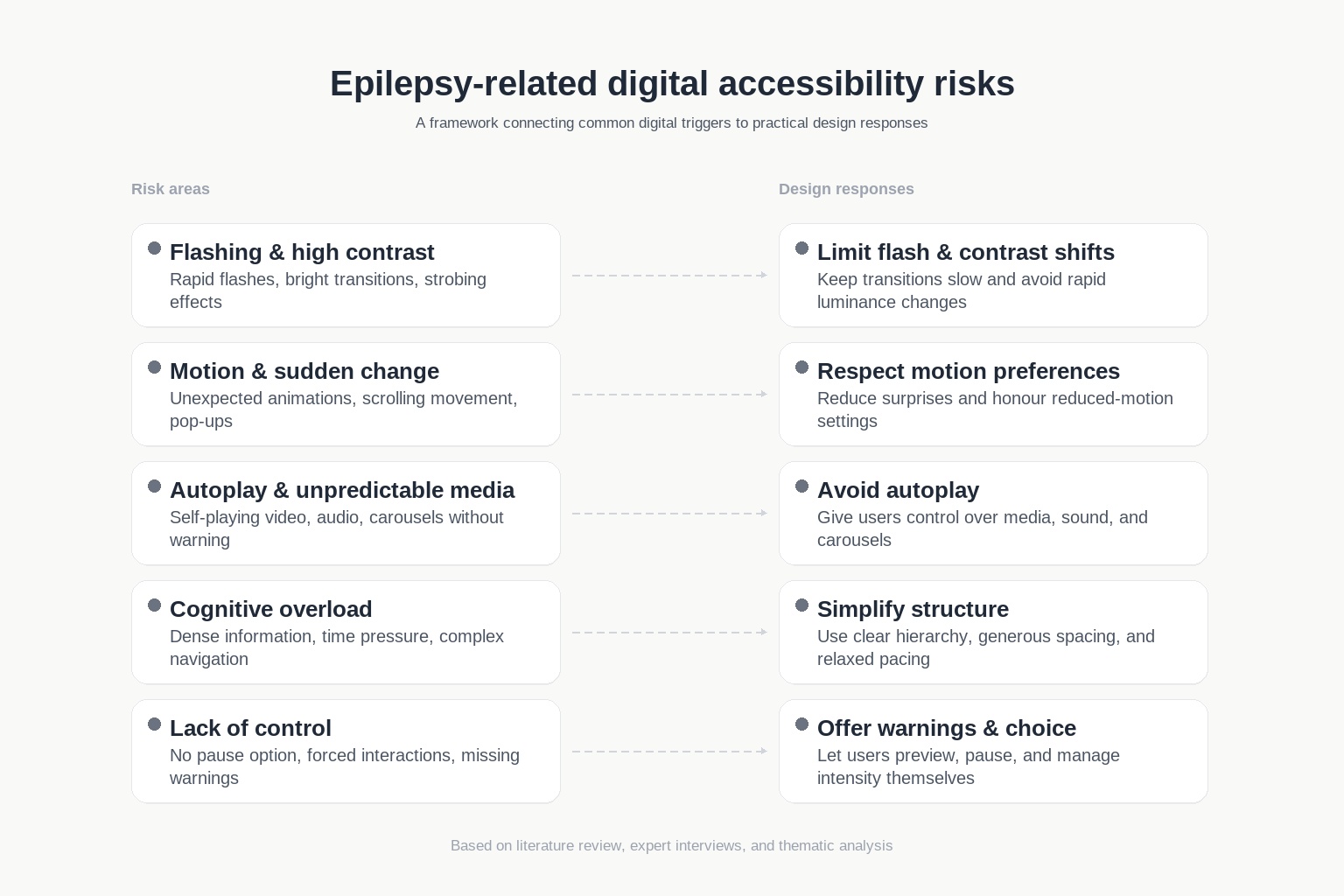
Digital accessibility often focuses on visible or widely recognised barriers. However, people with epilepsy may encounter risks that are less consistently considered in digital products, including flashing content, sudden visual changes, unpredictable media, cognitive overload, and limited user control. This thesis explored how these risks are addressed in current accessibility guidance and what designers and developers can do to create more considerate digital environments.
02
Research question
How well do current digital accessibility guidelines address epilepsy-related risks, and where could they be improved? The research also considered how accessibility recommendations could better connect medical knowledge, technical implementation, and practical design decisions.
03
My role
- Reviewing literature on epilepsy, digital triggers, web accessibility, and inclusive design
- Examining established accessibility guidance, including WCAG and cognitive accessibility recommendations
- Designing and conducting semi-structured interviews with an epilepsy specialist and a digital-accessibility expert
- Transcribing, coding, and analysing interview material
- Using thematic analysis to identify recurring patterns and gaps
- Comparing expert perspectives with existing standards and research
- Developing practical recommendations for designers, developers, and accessibility guidance
04
Research approach
The thesis combined two perspectives: existing academic and accessibility research, and expert knowledge from clinical and digital-accessibility practice. The literature review established the broader context around epilepsy-related triggers and digital accessibility. Expert interviews added practical insights into how visual, auditory, cognitive, and emotional factors may affect users in real digital environments. The findings were analysed using thematic analysis. This process identified recurring themes across the material, including different forms of digital triggers, limitations in existing guidance, practical protection measures, challenges in implementing accessibility requirements, and the risks introduced by emerging technologies.
05
Key insights
Risk goes beyond flashing content
Visual flicker remains important, but abrupt transitions, autoplay media, high contrast, sound, and cognitive overload can also affect how safe and manageable a digital experience feels.
User control matters
Clear controls for motion, media, sound, and content intensity can help people manage their own digital environment.
Guidance needs to be practical
Accessibility standards are most useful when they provide clear, actionable guidance that design and development teams can apply consistently.
Inclusion needs collaboration
Better digital accessibility requires exchange between medical expertise, lived experience, design, and technical implementation.
06
Design recommendations
The research resulted in practical directions for more inclusive digital design. These include designing predictable content, avoiding unnecessary sensory intensity, reducing cognitive load through clear structure, respecting motion preferences, offering understandable warnings and controls, and involving relevant users and medical expertise in the design process. The recommendations are intended as a starting point for reflection and development. They do not replace medical advice, formal standards, or testing with people affected by epilepsy.
07
Outcome
The thesis produced a critical analysis of current accessibility guidance and a set of research-informed recommendations for designers and developers. It strengthened my ability to investigate complex health-related challenges, bring together different kinds of evidence, and translate qualitative research into practical design implications. It also deepened my interest in responsible digital health and in accessibility as a core part of good product design.
08
Reflection
This project changed how I think about accessibility. It showed me that inclusive design is not only about meeting requirements. It is about recognising that people experience digital environments differently and designing with care for risks that may otherwise remain invisible. The thesis also taught me the value of interdisciplinary research. Bringing together health knowledge, accessibility expertise, and design thinking made the findings more grounded and practically relevant.