Mobile App
YUMI
A hormone-cycle app supporting training, nutrition, and wellbeing.
Developed as part of a group project
Role
Product research, UX/UI design, visual identity, mobile-app development
Date
2023 — 4 months
- Women's health
- Hormone tracking
- Product design
- UX/UI design
- Mobile development
- Flutter
- Swift
- HealthKit
- Brand identity
Focus
- Product research, concept development, and visual identity
- UX/UI design and mobile-app development
- Exploration of HealthKit and personal health data
01
The opportunity
Hormonal changes can affect energy, physical wellbeing, and training routines, but these connections are often difficult to understand in everyday life. Many cycle-tracking apps focus mainly on periods or symptom logging. YUMI explored a broader approach: helping users connect cycle-related insights with training, nutrition, and personal wellbeing. The goal was to create an experience that feels useful and motivating without encouraging users to optimise every part of their routine.
02
The challenge
Health and fitness content can easily become overwhelming or imply that there is one “correct” way to train, eat, or feel during each cycle phase. The product needed to offer personalised guidance while respecting that each person’s body, goals, and health situation are different. The challenge was to make hormone-related information approachable and easy to integrate into everyday decisions. Information needed to feel supportive rather than prescriptive.
03
My role
- Researching the target group, comparable products, and the market context
- Defining the product focus, core user needs, and key features
- Developing the app structure and user flows
- Creating the visual identity, including logo, colour system, typography, and graphic direction
- Designing wireframes and high-fidelity mobile screens
- Setting up the technical environment and contributing to app development
- Exploring database access, responsive mobile layouts, and possible HealthKit integration
- Working in a flexible Scrum-based team process
04
Product direction
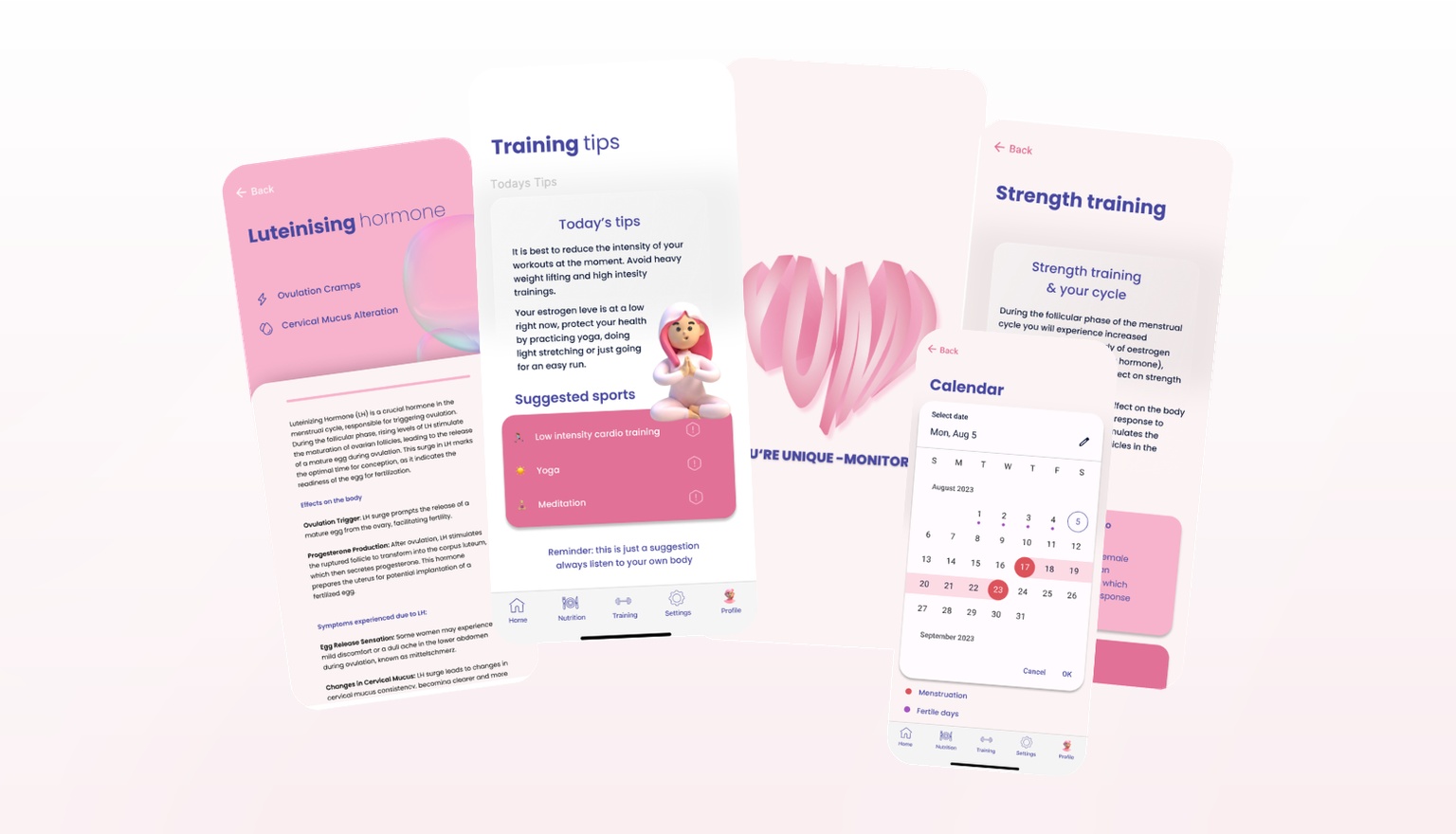
YUMI was designed for women with regular menstrual cycles who are interested in understanding how hormonal changes may relate to athletic performance, training, nutrition, and wellbeing.
Understand your cycle
A clear overview of cycle phases and hormone-related changes, designed to make personal patterns easier to follow.
Plan with context
Training and nutrition suggestions that connect everyday choices with the user’s current cycle context.
Reflect over time
Space to notice patterns in energy, movement, symptoms, and wellbeing without reducing health to a single score.
05
Design and development
The project combined product design with practical mobile-app development. Alongside the app structure and interface, the team developed a distinct visual identity intended to feel supportive, energetic, and recognisable. The development work included creating the mobile interface, integrating visual assets, structuring data access, and exploring HealthKit as a potential source of relevant personal data. The result was a cohesive product prototype that connected the concept, user experience, and technical implementation.
06
Outcome
YUMI resulted in a mobile-app prototype and a complete product concept spanning research, feature definition, visual identity, UX/UI design, and technical development. The project provided early experience in turning a women’s-health idea into a structured digital product. It required balancing user needs, visual communication, technical possibilities, and the sensitive nature of personal health data.
07
Reflection
YUMI was my first experience designing a complete digital product as part of a team. It showed me how closely product decisions, visual communication, and technical development are connected, and how important collaboration is when turning an idea into a coherent user experience. The project also highlighted the care needed when designing personalised health experiences. Useful guidance should support users’ own understanding, not create pressure or imply certainty where it does not exist.